

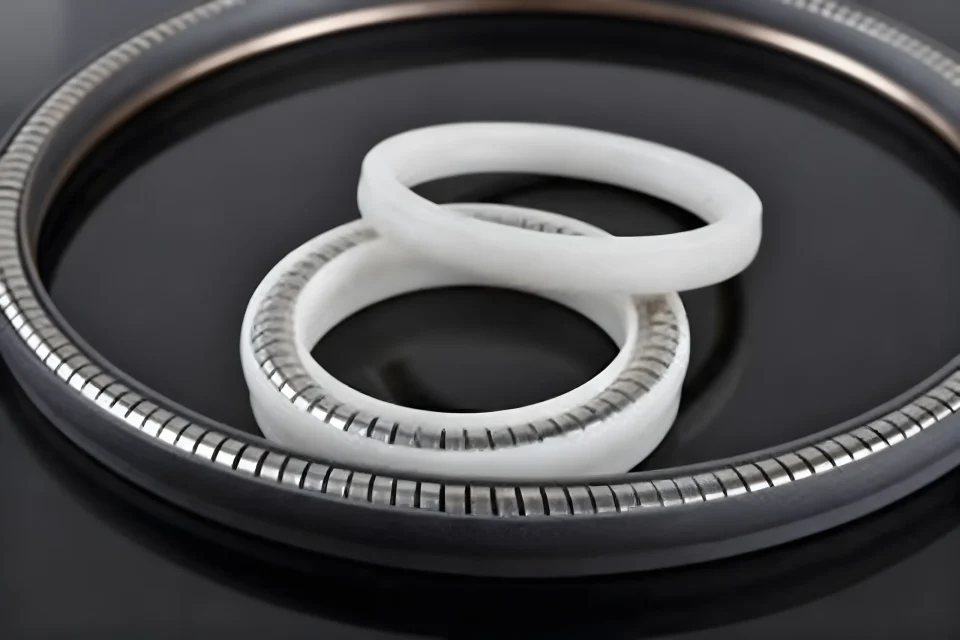
In industries such as mining, oil and gas, water treatment, power generation, manufacturing, and heavy engineering, sealing performance plays a critical role in ensuring equipment reliability and operational efficiency. While seals often receive most of the attention, the energising spring is equally important, providing the force needed to maintain consistent sealing performance under demanding operating conditions.
Whether used in valves, actuators, pumps, or other critical sealing systems, the correct energising spring helps maintain seal contact, compensate for wear, and deliver reliable performance under varying pressures and temperatures. Selecting the appropriate spring design and material is therefore essential for extending equipment life, reducing maintenance, and preventing costly failures.
Selecting the Right Spring for the Application
Different sealing applications require different spring characteristics, and understanding these differences is key to achieving long-term reliability.
Canted coil springs provide a near-constant load over a wide range of deflection, making them well suited to dynamic applications where operating conditions fluctuate. Their consistent sealing force makes them a popular choice for equipment that experiences frequent movement or pressure variation.
Helical springs generate a higher initial sealing force, making them ideal for static sealing applications commonly found in valves and actuators where maintaining a secure seal is the primary objective.
Garter springs apply uniform radial pressure around the sealing surface, making them particularly effective in rotary applications where even contact is required throughout continuous operation.
Continuous top rail springs deliver full-contact sealing force across the entire sealing surface, providing dependable performance in high-load and high-pressure environments where maximum sealing integrity is essential.
Matching the spring design to the specific operating conditions is fundamental to achieving optimum sealing performance and long service life.
Material Selection is Equally Important
The operating environment has a significant influence on spring performance. Temperature extremes, corrosive chemicals, seawater exposure, fatigue loading, and aggressive process conditions all affect the longevity and reliability of sealing systems.
High-performance alloys such as Inconel® are widely used where high temperatures and exceptional mechanical strength are required. Monel® offers excellent resistance to seawater and chemical corrosion while remaining non-magnetic, making it suitable for marine and offshore applications.
Hastelloy® provides outstanding resistance to highly corrosive acids and aggressive chemical environments, while Elgiloy® and Phynox® are recognised for their exceptional fatigue resistance, long service life, and excellent performance in cryogenic applications.
For applications requiring a lightweight, non-metallic alternative with excellent chemical resistance, PEEK™ provides an effective solution.
Selecting the appropriate material ensures the spring can withstand the environmental conditions while maintaining consistent sealing performance throughout its operational life.
Understanding Load-Deflection Behaviour
The relationship between spring force and compression directly influences sealing pressure and component lifespan. As a spring compresses, its load characteristics change, affecting how effectively the seal performs over time.
Prototype development and load-deflection testing allow engineers to evaluate spring behaviour before production, enabling adjustments to geometry, material selection, and force profiles to achieve the desired sealing performance. This process helps minimise risk and improves long-term equipment reliability.
Early Engineering Collaboration Delivers Better Results
Optimising sealing performance begins during the design stage. Close collaboration between spring manufacturers, design engineers, and equipment OEMs ensures that spring geometry, material selection, and force characteristics are aligned with the application’s performance requirements.
By addressing these factors early in the design process, manufacturers can develop sealing systems that offer greater durability, reduced maintenance requirements, and consistent performance even in demanding industrial environments.
As industries continue to demand higher levels of reliability and efficiency, selecting the right energising spring and material remains a key factor in maximising seal performance and extending the service life of critical equipment.
