

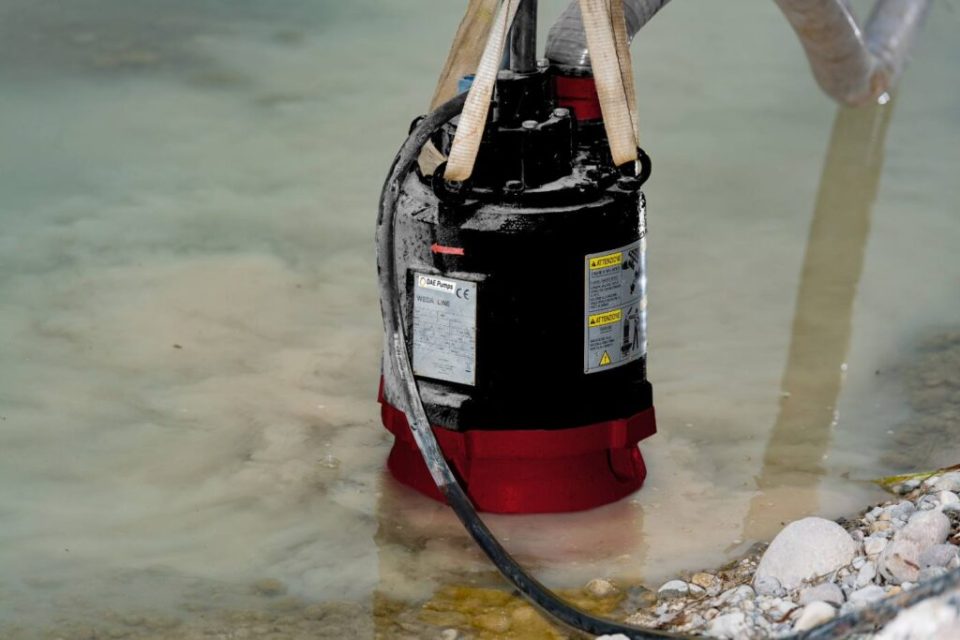
As Africa’s mining industry continues to expand, efficient tailings management has become increasingly important for improving operational efficiency, reducing environmental risks and supporting sustainable mining practices. One technology gaining widespread adoption across mining operations is the submersible slurry pump, which is specifically designed to handle abrasive, high-density slurries commonly found in tailings storage facilities.
Unlike conventional pumping systems, submersible slurry pumps combine the motor and pump into a single submerged unit, allowing them to operate directly within tailings ponds, sumps and slurry pits. Their robust design enables them to transport high concentrations of solids while reducing infrastructure requirements and improving operational flexibility.
Mine tailings—the residual mixture of finely crushed rock, sand, mineral residues and water left after ore processing—are highly abrasive and can also be corrosive depending on the mineral composition. Slurry concentrations typically range between 30% and 60% solids by weight, creating demanding conditions that require specialised pumping equipment.
One of the key advantages of submersible slurry pumps is that they eliminate the need for traditional pump houses. Because the pumps operate directly at the bottom of the pond, mining companies can reduce civil construction costs while simplifying installation and maintenance.
Their submerged configuration also makes them well suited to sites where water levels fluctuate or where space is limited, providing greater operational flexibility than conventional surface-mounted pumping systems.
Many modern submersible slurry pumps are equipped with integrated mechanical agitators that continuously loosen compacted tailings settled at the bottom of ponds. By re-suspending solids into the slurry stream, these agitators maintain high pumping efficiency while reducing blockages and improving solids recovery.
Across Africa’s mining sector, submersible slurry pumps are used in a wide range of applications. One of the most common is tailings pond dredging, where accumulated sediments are removed to restore storage capacity and reduce the risk of overflow.
The pumps are also widely used for transporting slurry between processing plants, backfill operations and tailings storage facilities, as well as for mine dewatering, handling water mixed with solids in open-pit and underground mining operations.
In mineral processing plants, submersible slurry pumps frequently feed thickeners and filter presses, supporting water recovery and improving overall process efficiency. Beyond mining, they are also applied in dredging, sand recovery, metallurgical slag handling and other heavy industrial operations.
Mining companies generally select between two installation methods depending on operational requirements.
Floating platforms or pontoons are commonly used on large tailings dams and deep-water storage facilities. The pumps are suspended beneath floating structures, allowing operators to move equipment across large areas while maintaining continuous dredging operations.
An increasingly popular alternative is the use of hydraulic submersible slurry pumps mounted directly on excavators. Powered by the excavator’s hydraulic system, these units offer exceptional mobility and can access compacted tailings deposits that are difficult to remove using conventional dredging methods.
This approach has become particularly valuable for targeted dredging, emergency tailings removal and mine rehabilitation projects, where flexibility and rapid deployment are essential.
To withstand the harsh operating conditions found in mining environments, modern slurry pumps are manufactured using highly wear-resistant materials. High-chrome alloys are commonly used for wet-end components to resist abrasion, while duplex stainless steel provides enhanced protection in acidic or corrosive conditions.
Mechanical seals, heavy-duty bearings and low-speed, high-torque agitators further improve durability while maintaining slurry concentrations of between 30% and 70% solids, depending on the application.
Selecting the correct slurry pump requires careful evaluation of several operational factors. Mining engineers typically assess slurry characteristics, including particle size distribution, density, pH and abrasiveness, alongside transport distance, pipeline friction losses, static head and overall system requirements.
Power availability also plays a major role in equipment selection. Depending on site conditions, operations may choose between electric submersible pumps or hydraulic-driven systems that integrate directly with excavators and other mobile equipment.
As African mining companies continue investing in safer, more efficient and environmentally responsible tailings management systems, submersible slurry pumps are expected to play an increasingly important role. Their ability to handle high-density slurries, minimise infrastructure requirements and improve operational efficiency makes them a valuable solution for modern mining operations seeking to optimise productivity while supporting sustainable resource management.
