

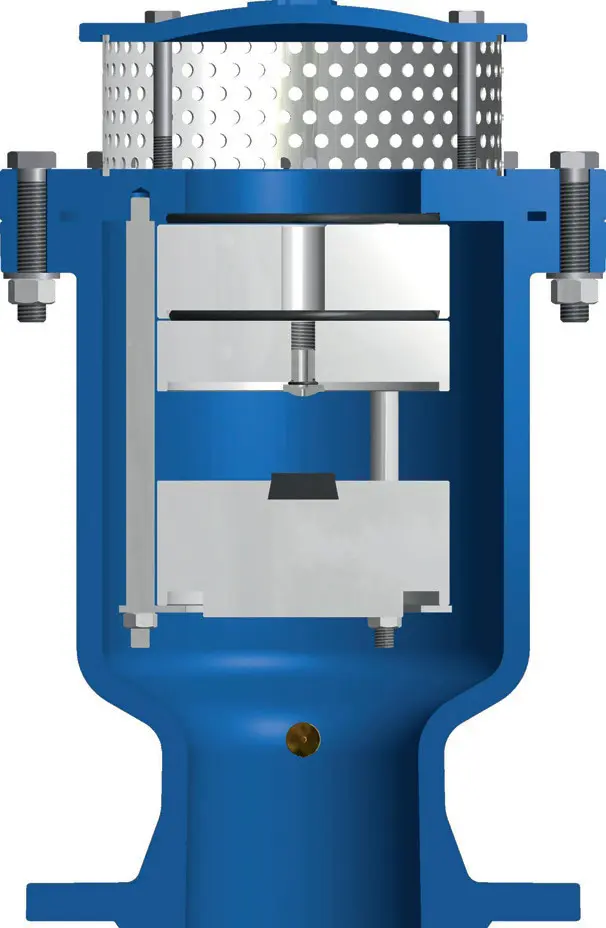
Efficient water management depends on reliable infrastructure, and one of the most important components in any pressurised pipeline system is the air-release valve. Used extensively in drinking water networks, wastewater systems, irrigation schemes and industrial pipelines, these valves play a critical role in maintaining pressure, removing trapped air and protecting pipelines from damage.
To improve the long-term performance of these systems, SAMSUN Makina has developed a new patent-pending sealing technology that addresses one of the most common causes of air valve failure—seal leakage resulting from float misalignment.
Addressing a Long-Standing Engineering Challenge
Air-release valves are expected to operate reliably for decades, often with a design life of around 50 years. During that time, they must perform several critical functions, including releasing trapped air during normal operation, expelling large volumes of air while pipelines are filling, admitting air during pipeline draining to prevent vacuum formation, and maintaining a leak-free seal under varying operating conditions.
Conventional air-release valves typically rely on flat rubber sealing surfaces. While effective when perfectly aligned, these designs are highly sensitive to even minor manufacturing tolerances, wear, or float movement. Small angular or vertical misalignments can prevent the float from seating correctly, resulting in air leakage, reduced efficiency and increased maintenance requirements.
A New Approach to Sealing
SAMSUN Makina’s newly developed sealing system replaces the traditional flat sealing surface with an innovative dimpled seating design that allows the float valve to align naturally during operation.
Rather than requiring perfect positioning, the new geometry accommodates minor angular and axial deviations without compromising the seal. This self-aligning capability ensures consistent contact between the float and the sealing surface, significantly reducing the likelihood of leakage throughout the valve’s operating life.
The design also distributes sealing pressure more evenly, reducing stress on the sealing material and extending component life.
Lower Manufacturing Costs and Greater Reliability
One of the key advantages of the new sealing technology is its ability to compensate for production tolerances. Conventional valve designs often require highly precise machining and tight manufacturing tolerances to ensure proper alignment of cylindrical floats within the valve body.
The new sealing geometry is far more tolerant of manufacturing variations, reducing the need for complex internal machining while maintaining excellent sealing performance.
This not only simplifies production but also lowers manufacturing costs and improves long-term operational reliability.
Designed for Demanding Water Applications
The sealing innovation is suitable for a wide range of pressurised liquid transport systems, including drinking water distribution networks, wastewater infrastructure, agricultural irrigation schemes, water treatment facilities, industrial process pipelines and other municipal infrastructure projects.
By preventing air accumulation within pipelines, the system helps maintain steady flow conditions, reduces pressure fluctuations and protects pumps from damage caused by air pockets and cavitation.
For operators, this translates into improved system efficiency, lower energy consumption, fewer maintenance interventions and longer equipment life.
Improved Performance Across Multiple Valve Designs
Unlike conventional sealing systems that depend on precise float alignment, the new design performs effectively with both single-float and multi-stage air-release valves.
Its self-aligning characteristics compensate for both vertical and horizontal float movement, making it particularly well suited to valves that use cylindrical floats rather than spherical designs.
Because the sealing system remains effective despite gradual wear of float guides and moving components, maintenance intervals can be extended without sacrificing sealing performance.
Supporting Efficient Pipeline Operation
Throughout normal pipeline operation, the valve automatically performs several essential functions. During pipeline filling, it rapidly expels trapped air to allow water to enter efficiently. Once the pipeline becomes fully pressurised, the valve closes smoothly while continuing to release smaller volumes of accumulated air during normal operation.
When pipelines are emptied for maintenance or operational purposes, the valve admits air into the system to prevent vacuum formation that could cause pipeline collapse or structural damage.
By automatically managing these operating conditions while maintaining a reliable seal, the valve contributes to safer and more efficient pipeline performance.
Extending Service Life
Beyond improving sealing performance, the new design also enhances the durability of the entire valve assembly. The improved stress distribution across the sealing surface reduces wear on both the seal and associated moving components, helping extend service life while reducing maintenance costs.
Its compatibility with recycled materials also offers potential environmental benefits by supporting more sustainable manufacturing practices.
A Step Forward for Water Infrastructure
As utilities and infrastructure operators continue to seek more reliable, efficient and cost-effective water management solutions, innovations in seemingly small components such as air-release valve seals can deliver significant operational benefits.
By overcoming the limitations of traditional flat sealing systems, SAMSUN Makina’s patent-pending sealing technology offers improved leak prevention, greater tolerance to manufacturing and operational variations, reduced maintenance requirements and enhanced long-term reliability.
For water utilities, irrigation operators and industrial pipeline owners, this innovation represents an important advancement in protecting valuable water resources while improving the efficiency and resilience of critical infrastructure.
