

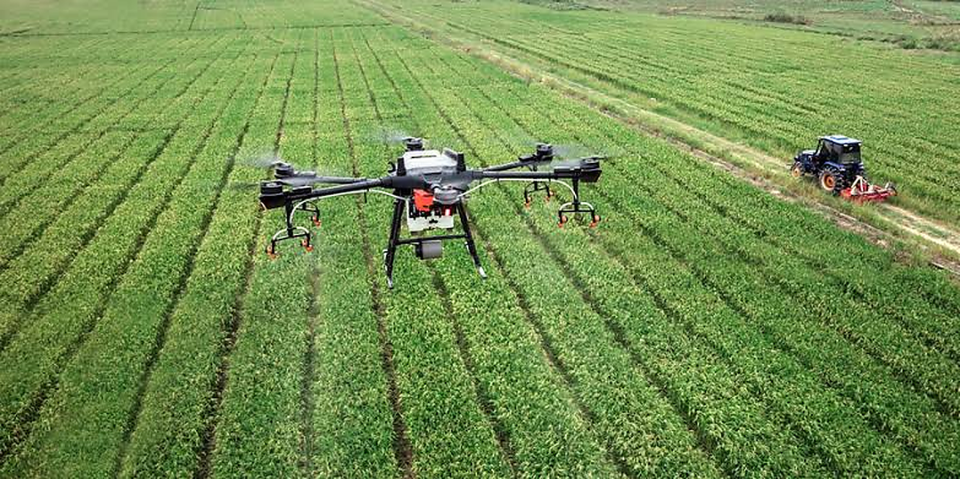
Artificial intelligence, drones, satellite imagery and mobile technology are creating new opportunities for farmers across Africa, helping them monitor crops, manage resources and respond to agricultural challenges more quickly.
Across countries including Ghana, Nigeria, Kenya and Zimbabwe, agritech businesses are developing solutions that combine artificial intelligence, unmanned aircraft and digital platforms to provide farmers with faster access to agricultural information.
Drones Bring Precision to the Field
In Ghana, agricultural technology companies are using drones to capture high-resolution images of farmland. AI-powered software can analyse this imagery to identify potential signs of crop disease, nutrient deficiencies and water stress.
This approach can help farmers move from manual field inspections towards faster, data-driven crop monitoring.
In Nigeria, precision agriculture practitioners are also using drones to monitor crops and train farmers in aerial data collection. The objective is to help apply inputs such as water, fertiliser and crop protection products more precisely, potentially improving resource efficiency.
AI-Powered Crop Diagnostics
AI is also making agricultural advice more accessible to farmers.
Zimbabwe-based eAgro has developed CropFix, a mobile tool that allows farmers to photograph a plant showing signs of disease and receive an AI-generated assessment of potential pests, diseases or nutrient deficiencies. The system can also operate through SMS, helping address connectivity challenges in rural areas.
In Ghana, Farmerline has developed Darli, an AI assistant that provides agricultural information through WhatsApp and supports multiple local languages.
These applications demonstrate how digital agriculture can combine AI with familiar communication platforms to reach farmers who may have limited access to conventional extension services.
Technology Expands Across Agricultural Operations
The use of digital technology is moving beyond crop disease detection and monitoring.
In parts of East Africa, drones equipped with night-vision cameras and motion sensors are being used for land and livestock surveillance. Satellite data is also helping pastoralists in Kenya monitor rainfall and vegetation conditions when identifying potential grazing areas.
These technologies can provide farmers and livestock producers with information that would otherwise be difficult to collect continuously across large areas.
Growing Support for Digital Agriculture
The adoption of agricultural technology is also being supported through wider agricultural development programmes.
The African Development Bank and World Bank have backed programmes involving agricultural productivity, value chains, climate-smart agriculture and digital data management. Kenya has also incorporated areas such as artificial intelligence, drone operation and big data analysis into agricultural education.
The wider development of smart farming across Africa is increasingly linking digital tools with efforts to improve productivity, resource efficiency and resilience. FAO has also highlighted GPS-guided drones, AI-supported advisory services and big-data platforms as emerging technologies for African agrifood systems.
Challenges to Wider Adoption
Despite the potential of AI and drones, significant barriers remain.
Connectivity, digital literacy, device affordability and access to reliable data can limit adoption, particularly among rural and smallholder farmers. AI tools also need to complement agricultural experts, extension officers and farmers’ practical experience rather than operate independently.
South Africa’s CSIR, for example, is testing a precision agriculture information system that combines satellite data, AI-powered analytics and drones to provide farmers with near real-time information for crop management and decision-making.
Ensuring that digital agriculture reaches smallholder farmers and communities with limited access to technology will remain important as adoption expands.
The Future of African Smart Farming
Africa’s agricultural technology sector is moving from experimentation towards wider adoption.
Drones, AI, satellite imagery and mobile platforms are creating new ways for farmers to collect information, identify problems and make decisions. The long-term impact will depend on making these technologies affordable, accessible and reliable while ensuring they work alongside agricultural knowledge and local farming practices.
