

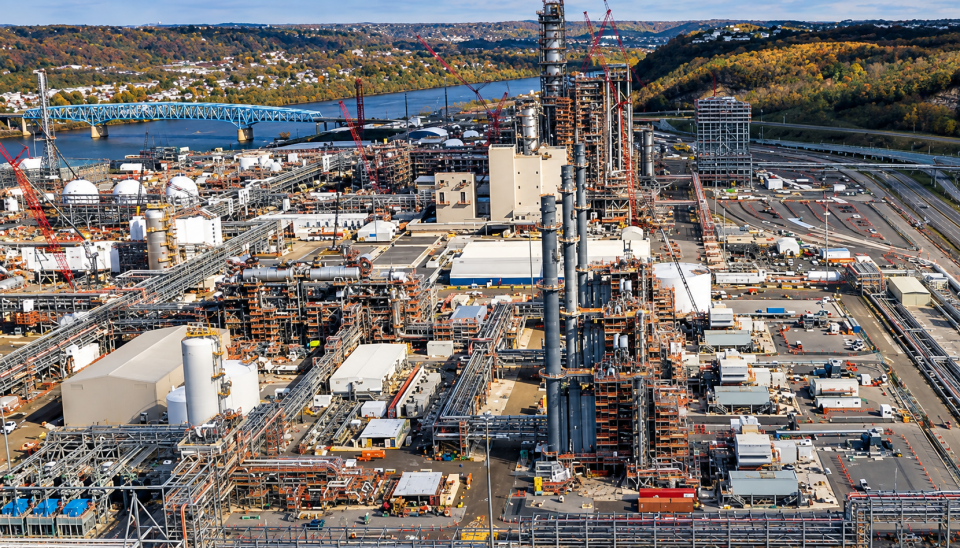
An investigation into an explosion at Shell Polymers Monaca in Pennsylvania, US, has highlighted critical weaknesses in valve controls, engineered safeguards and process safety management.
The US Chemical Safety and Hazard Investigation Board (CSB) concluded that the incident, which occurred on 4 June 2025, was caused by the inadvertent simultaneous opening of two motor-operated valves, allowing flammable cracked gas to enter an ethane cracking furnace.
Inadvertent Valve Opening Created Hazardous Gas Backflow
The incident occurred while Furnace 5 was being returned to operation after its coke trap had been cleaned.
Two motor-operated valves intended to isolate the furnace were inadvertently opened at the same time. This created an unintended flow path from the downstream quench tower into the furnace.
Cracked gas from four operating furnaces subsequently flowed back into Furnace 5. Approximately six minutes after the valve command was issued, the gas reached the firebox and contacted lit pilot flames, triggering an explosion and subsequent fire.
The blast ruptured the furnace firebox wall. Fifteen employees in the ethane cracking unit were evacuated, while a contractor trapped in an adjacent lift was rescued. No injuries were reported.
Significant Property Damage
The CSB estimated that approximately 5,100 pounds of ethylene and combustion products were released during the incident.
Shell estimated property damage at approximately $95 million. Furnaces 4 and 6 were temporarily taken offline for inspection, while Furnace 5 underwent reconstruction before returning to service in January 2026.
Investigation Highlights Engineered Safety Gaps
The investigation found weaknesses in safeguards designed to prevent hazardous backflow.
Shell had previously identified cracked-gas backflow as a potentially fatal hazard in its process hazard analyses. However, the facility relied on 11 administrative controls rather than configuring available engineered safeguards to prevent the hazardous flow path.
The CSB also identified deficiencies in the human-machine interface used to control the furnace valves.
Three similar furnace valves were displayed on a single control-system screen, with identification tags differing primarily by their final digit. According to the investigation, the interface lacked sufficient labelling, separation of complex logic and confirmation safeguards, increasing the potential for an incorrect valve command.
The investigation also found that the process control engineer assigned to the task had not previously performed it and had limited process knowledge.
Shell Introduces Additional Safeguards
Following the incident, Shell implemented several changes to strengthen process safety.
These included local control of the furnace valves, new safety instrumented system logic designed to prevent the tower-side valve from opening under specified conditions, and a revised operating procedure supported by additional training.
The changes are intended to provide greater protection against hazardous gas backflow and reduce reliance on administrative controls.
CSB Issues Two Recommendations
The CSB has issued two recommendations to Shell.
The first calls for a review of process hazard analyses to identify catastrophic scenarios that rely solely on administrative controls.
The second calls for an engineered control capable of preventing cracked-gas backflow into the furnace during all operating modes.
The recommendations remain open pending a substantive response or evaluation of Shell’s response.
The incident highlights the importance of engineered valve safeguards, reliable process control systems and robust safety instrumentation in petrochemical operations where unintended flow paths can create serious process-safety risks.
