

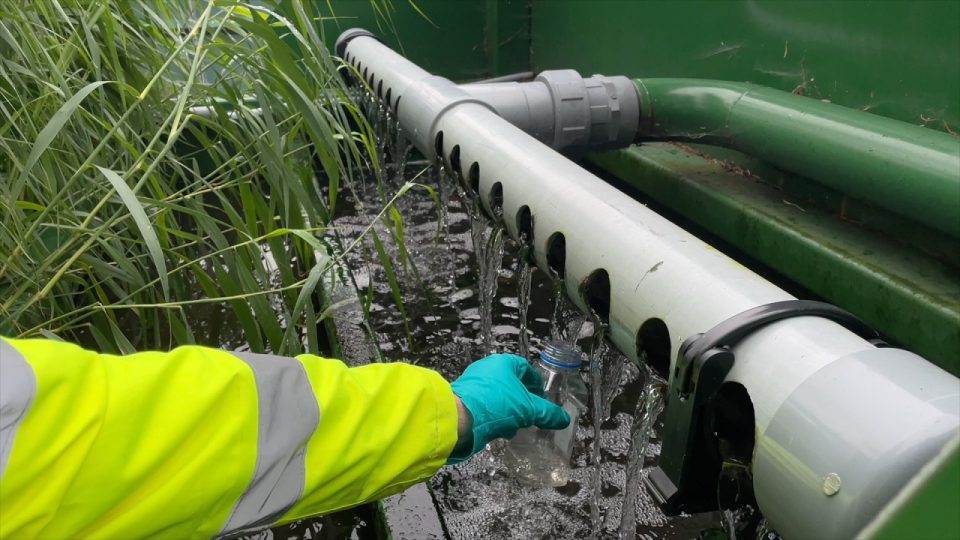
A mobile reed bed wastewater treatment system is being trialled by Scottish Water to provide a flexible, low-energy treatment solution for smaller and remote wastewater treatment works.
The transportable reed beds were installed at Moscow Wastewater Treatment Works in East Ayrshire at the end of 2025. After eight months of monitoring, data from the pilot indicates that the system is helping improve final effluent quality and meet the targets established for the trial.
The reed beds are housed in 20-yard roll-on roll-off skips, allowing the treatment units to be transported between sites and deployed where additional wastewater treatment capacity is required.
Nature-based filtration for wastewater treatment
Reed beds provide a natural treatment process that can help remove contaminants including phosphorus, nitrates and biodegradable organic matter from wastewater effluent.
At the Moscow facility, wastewater passes through primary and secondary treatment before entering the mobile reed bed. The system provides an additional filtration and biological treatment stage before the treated effluent is discharged.
The reeds create an oxygen-rich environment that supports aerobic bacteria, which help break down organic pollutants remaining in the wastewater.
Flexible treatment for changing wastewater flows
One of the key advantages of the mobile system is its ability to respond to variations in wastewater flows.
During dry periods, lower water flows can result in more concentrated wastewater entering treatment facilities. Heavy rainfall can create a different challenge by flushing accumulated organic material through sewer networks and into treatment works.
The mobile reed beds provide an additional treatment stage that can help manage these variations while improving the quality of final effluent.
Low-energy alternative to permanent infrastructure
Scottish Water’s research and development team says the system offers a cost-effective and low-carbon approach to wastewater treatment.
Because the units can be transported and scaled according to requirements, the technology could provide an alternative to constructing additional permanent concrete treatment structures at smaller facilities.
The ability to relocate the treatment units could also allow wastewater operators to deploy additional treatment capacity at different sites as operational requirements change.
Potential wider rollout
The initial results from the pilot indicate potential for the technology to be used more widely across remote and smaller wastewater treatment facilities.
The project highlights the growing role of nature-based wastewater treatment technologies in improving effluent quality while reducing energy consumption, infrastructure requirements and environmental impact.
If adopted more broadly, mobile reed bed systems could provide wastewater operators with a flexible option for strengthening treatment performance across rural and remote sites.
