

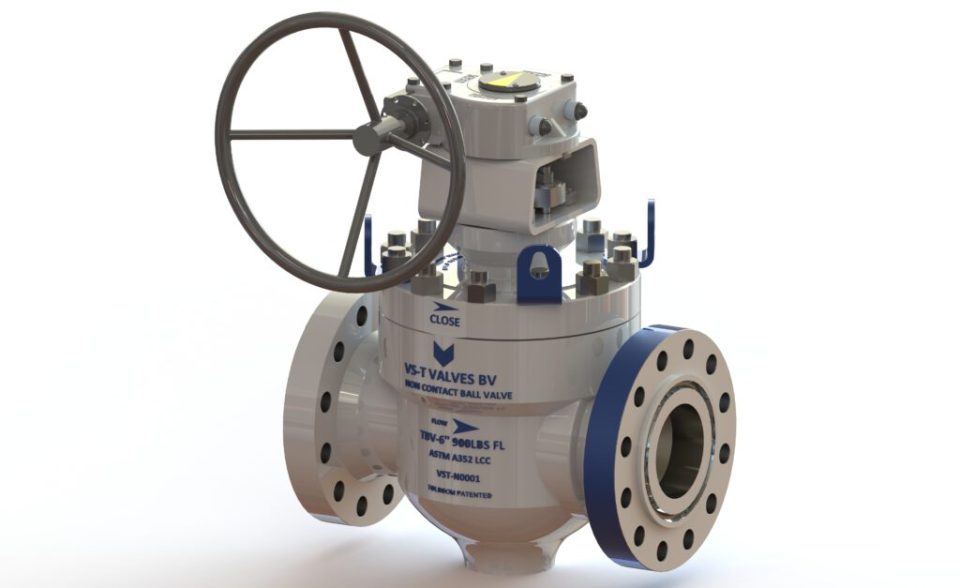
A pioneering valve technology once considered ahead of its time has been successfully re-engineered for modern industry, offering improved sealing performance, enhanced reliability, and easier manufacturing for demanding process applications.
Originally developed during the 1990s by Norwegian valve specialist Ingolf Holmslet, the double-seated non-contact ball valve has been reintroduced as the KT Valve, following a comprehensive redesign in partnership with Italian precision engineering company Téchne. The revived design combines advanced CNC manufacturing with modern engineering analysis to overcome the production challenges that limited its original commercial success.
From Innovation to Commercial Revival
The original valve, known as the e-ball valve, featured an innovative double-seated non-contact design that delivered exceptional performance in harsh operating environments. Approximately 200 units were installed in Norway’s offshore sector, where they proved highly effective in applications that challenged conventional ball valves.
Despite its technical advantages, the valve’s complex geometry exceeded the manufacturing capabilities of the time, resulting in high production costs that prevented wider market adoption. Production eventually ceased, and the design remained dormant for nearly a decade.
The project was revived when Holmslet partnered with Téchne, a specialist precision machining company equipped with advanced CNC manufacturing technology. Extensive redesign work, supported by Finite Element Analysis (FEA), enabled engineers to simplify production while maintaining the valve’s original performance advantages.
Successful Testing Demonstrates Production Readiness
The first production-ready KT Valve was manufactured as a 4-inch Class 600 model and subjected to an extensive validation programme designed to verify its durability and sealing performance.
Engineers manufactured components for multiple valves using metal-to-metal seat technology while eliminating traditional lapping processes during assembly. Components were assembled interchangeably to demonstrate manufacturing consistency.
The valve successfully completed hundreds of operating cycles under 100-bar differential pressure while maintaining zero leakage throughout testing. Additional evaluations included increased operating torque, seat interchangeability tests and repeated pressure testing, all confirming the robustness of the design.
According to the development team, the successful results demonstrate that the KT Valve has moved beyond the prototype stage and is now ready for commercial production.
Fixed Seat Design Delivers Improved Performance
Unlike conventional trunnion-mounted ball valves that rely on spring-loaded floating seats, the KT Valve incorporates fixed angled seats that wedge the ball into position during closure.
This design eliminates many of the sealing challenges associated with traditional floating-seat valves, where friction, wear or contamination can prevent proper contact between the seat and the ball.
The wedging mechanism also creates a self-cleaning effect during the final stage of valve closure, removing deposits from sealing surfaces and helping maintain long-term sealing integrity in demanding operating conditions.
Reduced Wear and Enhanced Flow Characteristics
One of the KT Valve’s key innovations is its non-contact operating principle. During normal opening and closing, the ball and seats remain separated, only making contact during the first and final two percent of rotation.
This significantly reduces friction and mechanical wear compared with conventional ball valves, extending component life and lowering maintenance requirements.
The valve also distributes flow evenly around the seat circumference during operation rather than concentrating flow through a small opening. This helps minimise turbulence, cavitation and erosion that commonly occur when conventional valves operate under high differential pressures.
Designed for Critical Industrial Applications
The KT Valve has been developed for applications requiring high reliability, tight shut-off and long service life under severe operating conditions. Its double isolation and bleed (DIB) configuration provides an additional level of operational safety for industries where leakage cannot be tolerated.
By combining advanced manufacturing technology with an innovative sealing concept, the KT Valve demonstrates how modern engineering can revive proven ideas that were previously limited by manufacturing constraints.
As industries continue to seek valves capable of handling increasingly demanding operating environments, the KT Valve represents a significant advancement in ball valve technology, offering improved reliability, lower maintenance requirements and enhanced operational performance.
