

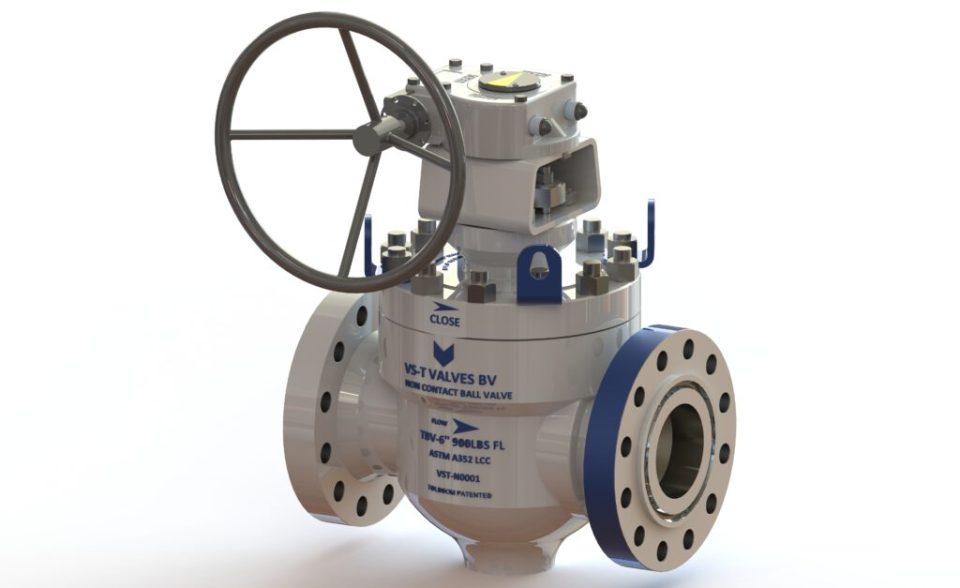
Innovative engineering concepts often arrive ahead of the technology needed to bring them to life. Such was the case with a pioneering double-seated non-contact ball valve developed in the 1990s. Although the design offered significant performance advantages, manufacturing limitations at the time made production highly complex and costly, preventing widespread commercial adoption.
The original valve, known as the “e-ball,” was designed to overcome some of the common shortcomings associated with conventional ball valves, particularly in demanding industrial environments. Despite its advanced design, production challenges and high manufacturing costs limited market acceptance. Around 200 units were eventually installed in the Norwegian offshore sector, where they proved effective in applications that frequently caused premature failures in traditional valve designs. However, commercial viability remained elusive, and by 2013 production had ceased.
More than a decade later, advances in precision machining technology have provided an opportunity to revisit the concept. Working alongside Italian precision engineering company Téchne, the original design underwent a comprehensive review and redesign process supported by extensive Finite Element Analysis (FEA). The result is the KT Valve, a modernised version of the original non-contact ball valve that benefits from manufacturing capabilities unavailable when the concept was first introduced.
Using advanced CNC machining technology, engineers were able to achieve the precise tolerances and complex geometries required to manufacture the valve efficiently and consistently. To validate the redesign, the team produced a series of valves featuring metal-to-metal seat and ball contact without requiring traditional lapping processes for component adjustment. Components were assembled using randomly selected production parts to demonstrate repeatability and manufacturing consistency.
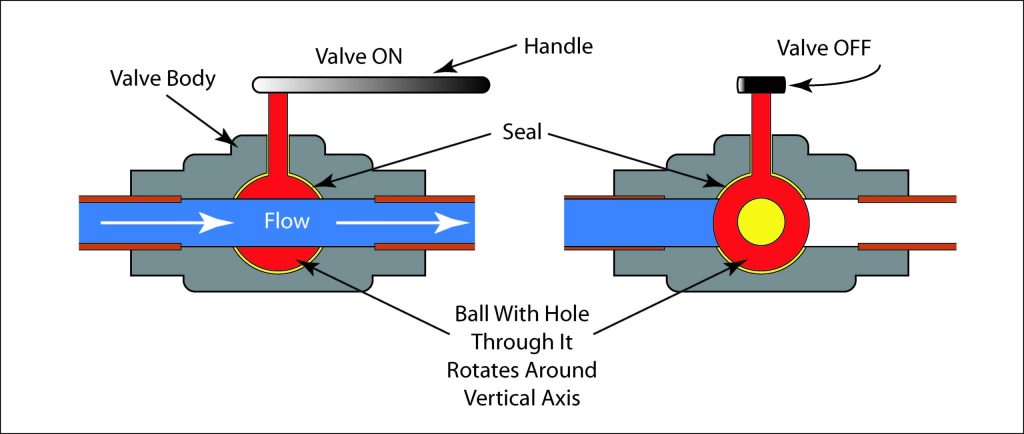
The valves then underwent extensive performance testing under demanding operating conditions. During testing, the valve completed hundreds of operating cycles under high differential pressure while maintaining leak-free performance. Engineers monitored torque requirements throughout the testing programme and conducted repeated sealing verification tests using both water and nitrogen. Even after prolonged operation and exposure to elevated closing forces beyond the original design specifications, the valve continued to perform reliably without leakage or damage to critical sealing surfaces.
Additional tests were conducted to evaluate component interchangeability by replacing and repositioning seating components. The valve maintained its sealing integrity throughout these trials, demonstrating the robustness of the design and confirming its readiness for commercial production.
The KT Valve introduces several key innovations that distinguish it from conventional trunnion-mounted ball valves. Traditional designs typically rely on floating seats supported by springs to create a seal against the ball. In some operating environments, contamination, deposits, or friction can prevent proper seat movement, resulting in leakage and reduced performance.
The KT Valve addresses these challenges through a wedging ball design combined with fixed, angled seats that mechanically force the ball into the sealing position during closure. This approach eliminates reliance on floating seat movement and enhances sealing reliability. The design also incorporates a self-cleaning action that removes deposits from sealing surfaces during operation, helping maintain performance in applications involving difficult media.
Another significant advantage is the valve’s non-contact operating principle. During normal operation, there is no continuous contact between the ball and seats, reducing wear and extending service life. Contact occurs only during the final stages of opening and closing, minimising friction while maintaining effective sealing.
The valve also improves flow characteristics during operation. Conventional ball valves can experience concentrated high-velocity flow during opening and closing, increasing the risk of erosion and cavitation. The KT Valve’s design distributes flow more evenly around the seat circumference, reducing localised stress and improving operational reliability.
In addition, the KT Valve functions as a Double Isolation and Bleed (DIB) valve, providing enhanced isolation performance for critical industrial applications where safety and reliability are essential.
The successful redevelopment of the KT Valve demonstrates how advances in manufacturing technology can unlock the potential of concepts once considered commercially impractical. What was once an innovative but difficult-to-produce design has now evolved into a fully tested, production-ready solution capable of meeting the demands of modern industrial operations.
