

As Africa’s industrial sectors continue to modernise, pump selection is evolving beyond the traditional focus on flow rate and pressure. Increasingly, engineers are recognising that shear rate plays a crucial role when handling high-value, complex and shear-sensitive fluids across industries such as mining, water and wastewater treatment, food processing, chemicals, oil and gas, pulp and paper, battery manufacturing and renewable energy.
Selecting the right pump is no longer simply about moving fluid efficiently—it is also about protecting product integrity, improving process reliability and reducing operational costs.
These were among the key insights shared by Michael Tekneyan, Head of Development Digital Products at NETZSCH Pumps & Systems, during a recent presentation on shear-sensitive fluid handling.
Understanding Shear Rate
Whenever a fluid passes through a pump, energy is transferred into the product. According to Tekneyan, the design of the pump and its operating speed determine the amount of shear applied to the fluid.
Shear rate refers to the deformation experienced by a fluid as it moves through different flow velocities. High velocities passing through narrow clearances generate greater shear forces, while slower movement through larger passages produces lower shear rates.
For many industrial fluids, excessive shear can significantly alter their physical properties.
While Newtonian fluids generally maintain consistent viscosity, many industrial products are non-Newtonian and respond differently under shear conditions. Shear-thinning fluids become less viscous as shear increases, whereas shear-thickening fluids become more viscous. These changes can directly influence pumping efficiency, process stability and final product quality.
For African industries processing increasingly sophisticated products, understanding these fluid behaviours is becoming essential for achieving consistent production performance.
Looking Beyond Flow and Pressure
Traditionally, pump selection has centred on meeting required flow rates and operating pressures. However, Tekneyan argues that this approach may overlook one of the most important performance factors when handling sensitive fluids.
Calculating shear rates within pipelines is relatively straightforward, but understanding what occurs inside the pump itself is considerably more challenging.
To overcome this, NETZSCH uses Computational Fluid Dynamics (CFD) simulations to model fluid behaviour inside its pumping systems. These advanced simulations allow engineers to visualise pressure distribution and calculate shear-rate patterns throughout the pumping process.
One outcome of this work is the development of shear-rate histograms, which illustrate the proportion of fluid exposed to varying shear levels inside a pump.
This enables engineers to compare different pump technologies beyond conventional performance criteria. Two pumps may deliver identical flow and pressure, yet expose the product to vastly different shear conditions, potentially affecting viscosity, product consistency and overall process performance.
As African manufacturers continue investing in higher-value production, incorporating shear analysis into pump selection can help improve product quality while reducing waste and unplanned downtime.
Supporting Greenfield and Expansion Projects
The greatest opportunity to optimise shear performance often arises during greenfield developments and major plant expansions.
At this stage, engineers have greater flexibility to evaluate alternative pumping technologies before equipment specifications are finalised.
Rather than relying solely on reducing pump speed—which may compromise production throughput—selecting the most appropriate pump technology for the application often delivers better long-term results.
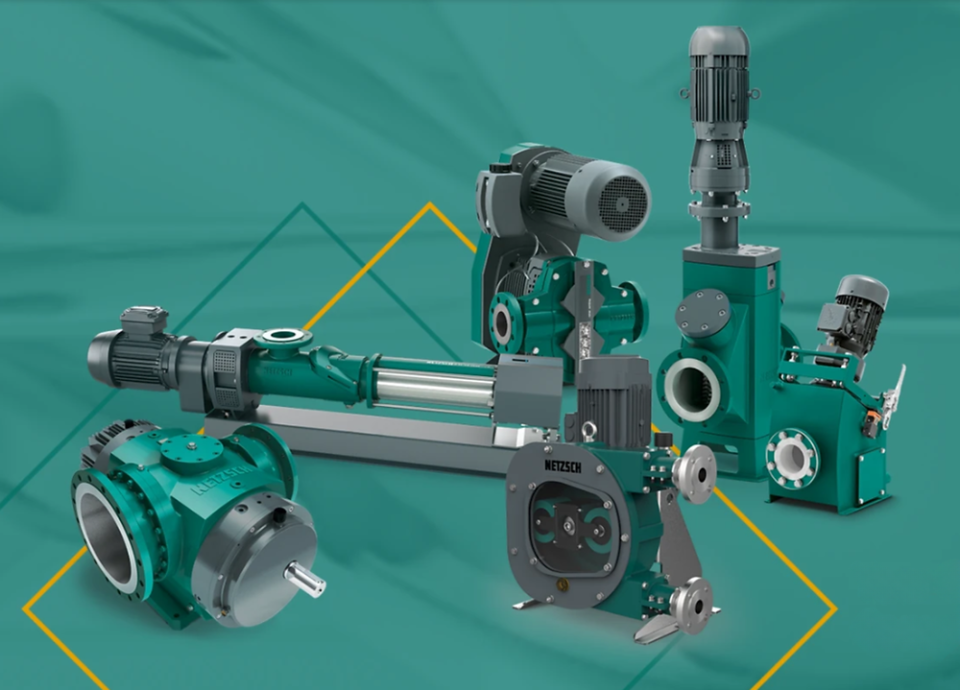
NETZSCH applies this design philosophy across its range of progressing cavity pumps, rotary lobe pumps, multi-screw pumps and peristaltic pumps, helping customers minimise shear while maintaining required process performance.
For Africa’s expanding mining, manufacturing and processing sectors, making informed pump choices during project design can improve operational efficiency and reduce lifetime operating costs.
Digitalisation Is Transforming Pump Performance
Digital technologies are also changing how operators monitor and optimise pumping systems.
NETZSCH is developing proof-of-concept digital platforms capable of calculating and displaying live shear-rate distributions using real-time operating data.
Through Internet of Things (IoT)-enabled dashboards, operational parameters—including pump speed, flow rate, pressure and temperature—are analysed continuously to generate a virtual representation of shear conditions within the pump.
Because shear rate cannot currently be measured directly using physical sensors, these “virtual sensors” provide operators with valuable insight into how pumping conditions affect sensitive fluids.
The technology could prove particularly valuable in African processing plants handling multiple product types or batch manufacturing operations, where fluid properties and shear sensitivity vary between production runs.
Improving Process Efficiency Across African Industries
Although excessive shear is not encountered in every application, it is becoming an increasingly important consideration as industries process more specialised products requiring tighter quality control.
Engineers should also recognise that pumps are not always the sole source of excessive shear. Filters, valves, pipelines and other process components can also generate damaging shear forces where fluids pass through narrow restrictions at high velocity.
As Africa continues expanding its industrial, mining and manufacturing capacity, understanding how pumping systems interact with the fluids they handle will become increasingly important.
By considering shear rate alongside traditional flow and pressure requirements, engineers can improve product quality, extend equipment life, enhance process efficiency and support more reliable industrial operations across the continent.
