

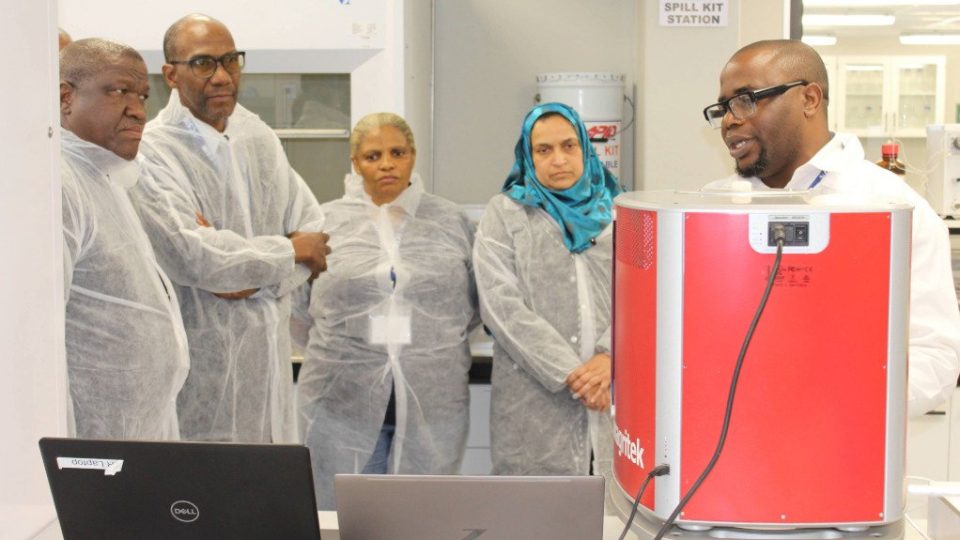
The Council for Scientific and Industrial Research (CSIR) has taken responsibility for the second phase of South Africa’s Active Pharmaceutical Ingredient (API) Innovation Cluster, strengthening efforts to develop and commercialise technologies for local pharmaceutical manufacturing.
The cluster focuses on the development of small-molecule APIs, which are the active components in medicines responsible for producing their intended therapeutic effects.
Under Phase 2, the CSIR will coordinate a national network involving universities, research institutions, industry and other stakeholders to advance pharmaceutical technologies from research and proof-of-concept stages towards commercial applications.
The initiative will support projects at universities including the University of Johannesburg, University of Limpopo, University of Pretoria and Stellenbosch University. Translational development activities will also make use of facilities including CSIR FuturePHARMA and the API+ Laboratory at CPT Pharma in Pretoria.
The second phase is designed to strengthen South Africa’s pharmaceutical innovation ecosystem by supporting technology development, skills development and collaboration between research institutions and pharmaceutical companies.
The API Innovation Cluster was established in 2020 to strengthen local pharmaceutical manufacturing capabilities and address vulnerabilities exposed by disruptions to global medicine supply chains.
According to CSIR, the next phase will focus on converting research and technological developments into practical manufacturing capabilities, with collaboration between academia, industry and research institutions playing a central role.
The cluster will also support technology transfer to local pharmaceutical companies, creating opportunities to develop competitive API manufacturing processes and strengthen domestic production capabilities.
Phase 2 of the initiative will run until the end of 2028. A planned third phase, covering 2029 to 2031, is expected to focus on piloting manufacturing processes for locally developed APIs and licensing commercial production technologies.
The development represents an important step in strengthening South Africa’s pharmaceutical manufacturing capabilities, while creating opportunities for technology development, local production and the expansion of the country’s pharmaceutical innovation ecosystem.
