

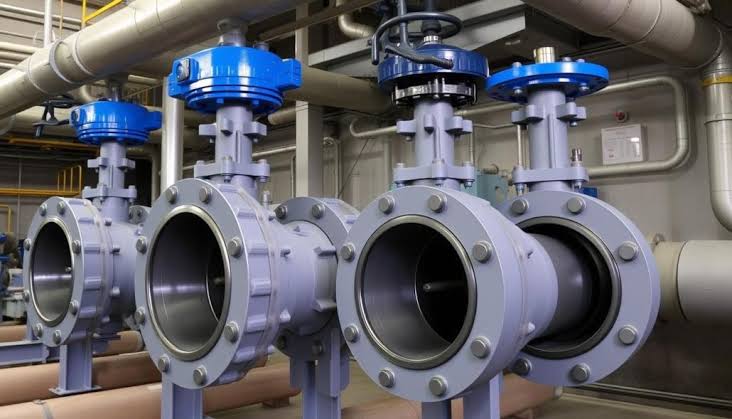
The global gate valve wedge seat assemblies market is expected to enter a sustained growth phase through 2035, supported by aging industrial infrastructure, replacement demand and continued investment across oil and gas, water and wastewater, chemical processing, pharmaceutical manufacturing and power generation.
According to an IndexBox market analysis, demand for gate valve wedge seat assemblies is projected to expand at a compound annual growth rate of 5.5% to 7.5% between 2026 and 2035, with the market index forecast to reach approximately 175 by 2035, based on 2025 as the reference year.
Gate valve wedge seat assemblies are critical components in industrial valve systems, providing reliable sealing and isolation across a wide range of fluid-handling applications. Increasing emphasis on equipment reliability, leak prevention and lifecycle performance is encouraging operators to replace ageing components with higher-performance assemblies.
Oil and gas remains a major demand sector
The oil and gas sector accounts for an estimated 30% of market demand, making it the largest end-use segment identified in the report.
Demand is being supported by maintenance requirements across mature oil and gas infrastructure as well as new pipeline, LNG, refinery and petrochemical projects. Operators are also increasingly seeking materials capable of operating in demanding environments, including corrosive and sour-service applications.
Duplex stainless steels and high-performance alloys such as Inconel are expected to see greater use where enhanced corrosion resistance and durability are required.
The growing adoption of digital monitoring technologies is also influencing valve component requirements, with operators increasingly looking for assemblies compatible with smart valve systems and condition-monitoring technologies.
Water infrastructure upgrades support demand
The water and wastewater sector represents an estimated 25% of demand, driven by infrastructure modernisation, network expansion and efforts to reduce water losses.
Gate valve wedge seat assemblies are widely used in water distribution networks, treatment facilities and pumping stations where reliable isolation is essential. Resilient-seated designs are gaining attention because of their ability to provide tight shut-off while reducing maintenance requirements.
The market is also being influenced by the growing adoption of remotely operated and monitored valves. Integration with SCADA and smart water-management systems is expected to increase the demand for valve assemblies that can support automated operations.
Chemical processing requires higher-performance materials
Chemical processing represents approximately 20% of demand, with valve components exposed to aggressive chemicals, high temperatures and challenging operating environments.
Manufacturers are increasingly developing assemblies using high-performance alloys and advanced surface treatments designed to extend service life in corrosive applications.
Predictive maintenance and condition monitoring are also becoming more important as chemical producers seek to reduce unplanned shutdowns and improve plant reliability.
Power generation continues to require reliable valve components
The power generation sector accounts for an estimated 15% of demand, with gate valve wedge seat assemblies used in steam, cooling-water and auxiliary systems.
Replacement and maintenance programmes at ageing power facilities are expected to remain an important source of demand. At the same time, higher operating temperatures and pressures in some power-generation applications are creating opportunities for specialised valve components.
The report also identifies opportunities linked to geothermal and concentrated solar power projects, where reliable fluid-control equipment is required for demanding operating conditions.
Pharmaceutical demand moves toward hygienic valve solutions
Bioprocessing and pharmaceutical manufacturing represents an estimated 10% of the market and is identified as one of the fastest-growing application areas.
Growing investment in biopharmaceutical manufacturing is increasing demand for hygienic and highly controlled fluid-handling equipment. Applications include media preparation, fermentation, purification and final formulation processes.
Manufacturers are increasingly focusing on smaller-diameter assemblies, electropolished surfaces, material traceability and detailed validation documentation to meet stringent pharmaceutical manufacturing requirements.
Replacement demand remains a key market driver
Across industries, the replacement of ageing infrastructure is expected to remain one of the strongest drivers of demand for gate valve wedge seat assemblies.
Other factors supporting market growth include expanding pipeline networks, LNG and petrochemical investment, water infrastructure upgrades, stricter leak-prevention requirements and the increasing use of predictive maintenance technologies.
However, the market continues to face challenges including lengthy supplier qualification processes, volatility in specialty alloy costs, long lead times for fully documented products and the presence of counterfeit or non-traceable components in some aftermarket channels.
Manufacturers that can provide material traceability, quality documentation, reliable lead times and high-performance sealing solutions are expected to be well positioned to benefit from the expanding premium segment.
With industrial operators placing greater emphasis on reliability, safety and lifecycle performance, demand for precision-engineered gate valve components is expected to remain strong across major process industries through 2035.
