

Applications in Valve, Pump and Infrastructure Monitoring
Introduction
Reliable position measurement is an essential requirement in many industrial systems. In particular, the monitoring of valve positions, actuator movements and structural displacements plays an important role in maintaining stable and safe operation of technical installations.
Inductive displacement sensors have been widely used for this purpose for many years. Their contactless measurement principle enables precise detection of linear movements while minimizing mechanical wear. Due to their robust design, these sensors can be deployed in demanding environments such as power plants, industrial machinery or infrastructure monitoring systems.
The sensors discussed in this article are manufactured by Schreiber Messtechnik and distributed by abj sensorik, which provides application support and international project supply.
Position Monitoring in Power Plant Systems
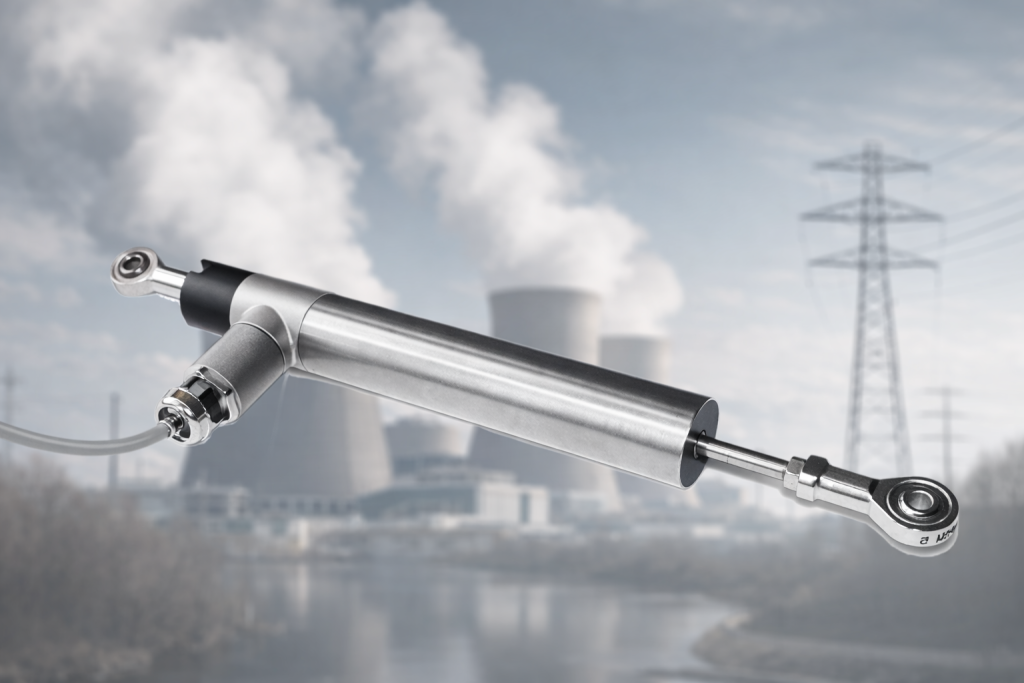
A typical application of inductive displacement sensors is the position feedback of control valves in power plant installations.
Examples include:
- high-pressure steam bypass valves
- water injection valves in steam turbines
In these systems, the valve position must be monitored accurately across the full operating range. The measured position is typically transmitted as a standardized signal, for example a 4–20 mA output, to the plant control system.
Several requirements arise from this application:
- precise position feedback over the full valve stroke
- stable measurements despite temperature variations
- simple installation and adjustment
- reliable long-term operation
Mechanical tolerances of the valve assemblies often require adjustable start and end points of the measurement range. Programmable displacement sensors allow this adaptation directly during installation using a teach-in procedure.
Measurement Principle
Inductive displacement sensors operate according to the differential choke principle (half bridge). The position of a movable core changes the inductance of two coil sections. This inductance change is detected and converted by the electronics into a proportional output signal.
The typical construction consists of:
- a hollow coil body with symmetrically wound coils
- magnetic shielding with high permeability
- a stainless steel housing
- a movable push rod made of a nickel–iron alloy
The interior between the coil assembly and the housing is completely encapsulated with hardened resin, resulting in a robust and sealed sensor design suitable for harsh environments.
Characteristics in Industrial Operation
The contactless measurement principle eliminates mechanical contact within the measuring system, which significantly reduces wear and contributes to long service life.
Key characteristics include:
- contactless measurement
- high repeatability
- stable zero point
- theoretically unlimited resolution (limited only by electronic noise)
- absolute position measurement without information loss during power failure
- capability for highly dynamic measurements
The movable core has no mechanical stop and can be withdrawn from the sensor. As a result, over-travel conditions do not cause damage to the sensor element.
Signal Processing and Interfaces
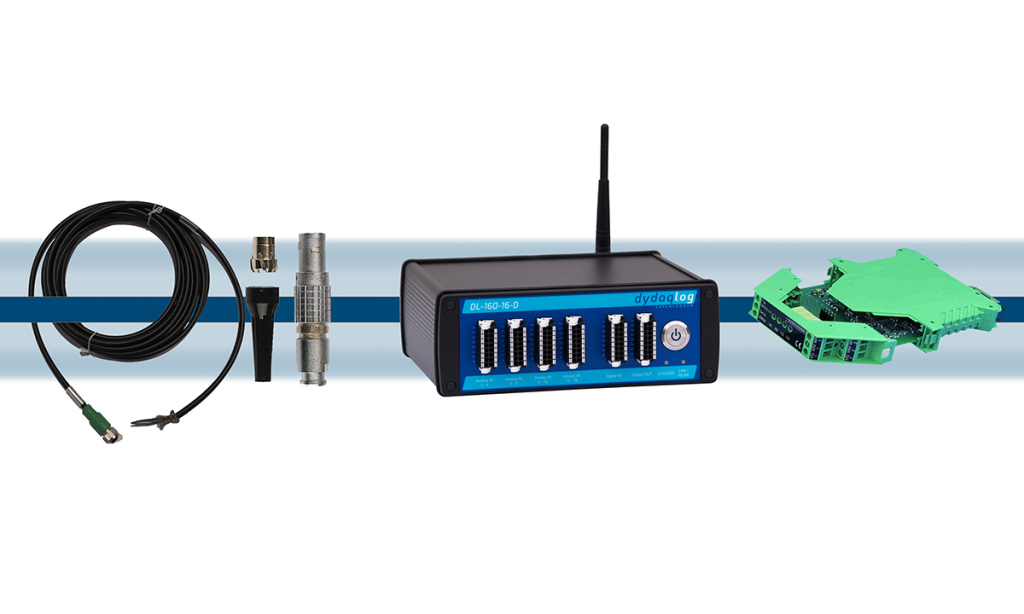
In programmable sensor versions, the analog signal is digitized using a 16-bit A/D converter and processed by a microcontroller. Measurement corrections can be applied using calibration data stored in an EEPROM.
The processed signal is then converted back into standardized analog outputs using a 16-bit D/A converter, including:
- 0(4)–20 mA
- 0–5 V or 0–10 V
The measurement range can be programmed using a teach-in procedure, allowing different mechanical strokes to be mapped using the same sensor type.
Mechanical Integration
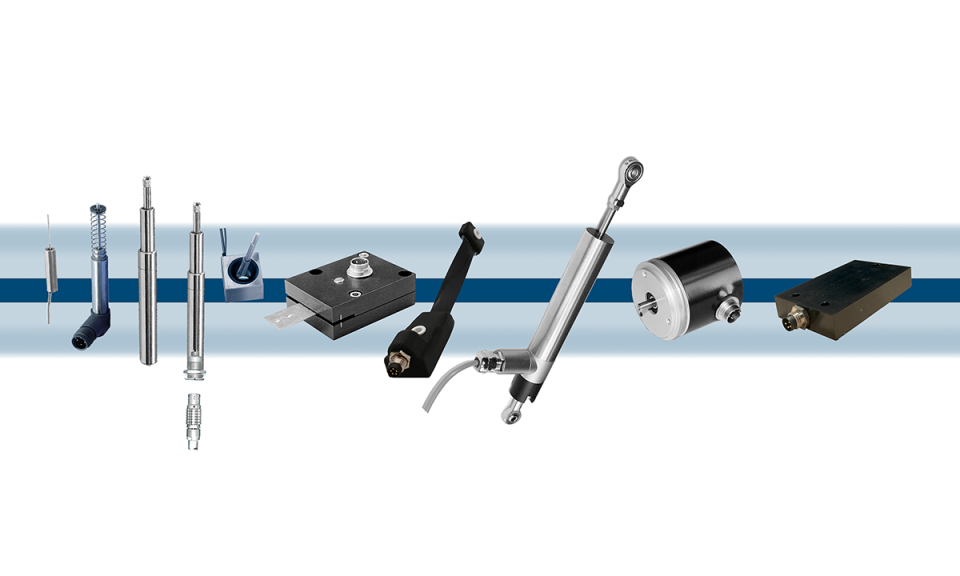
To accommodate different installation requirements, several mechanical configurations are available, including:
- spherical joints at rod and housing ends
- protective tubes
- probe versions with return springs
Electrical connection can be realized either via connectors or via permanently molded waterproof cables. In the cable version, the sensor can achieve IP68 protection class for submersible operation.
The permitted supply voltage range is 10–32 VDC, and the achievable measurement accuracy is approximately 0.1 %.
Additional Application Areas
Besides valve monitoring in power plants, inductive displacement sensors are also used in various other industrial applications, for example:
- position feedback in mechanical actuators
- measurement of lever movements
- feedback systems in proportional hydraulic valves
- vibration test systems and material testing equipment
The combination of robust construction and contactless measurement makes these sensors suitable for applications where long-term stability and reliability are critical.
Conclusion
Inductive displacement sensors represent a well-established technology for precise position and displacement measurement in industrial systems. Their contactless operation, robust mechanical design and flexible adjustment of the measuring range allow integration into a wide range of technical applications.
Sensors manufactured by Schreiber Messtechnik and distributed by abj sensorik are used in numerous industrial environments where reliable position monitoring is required.
